10 strokes
Character #870 · The First 1000
缺 quē meaning: deficiency
deficiency; lack; scarce; vacant post; to run short of
- Strokes
- 10
- Both scripts
- 缺
- Poster cell
- B32
简 = 繁缺 is the same in both scripts. The switch changes the example words.
Stroke data couldn't load. Check your connection and try again.
02 练习纸
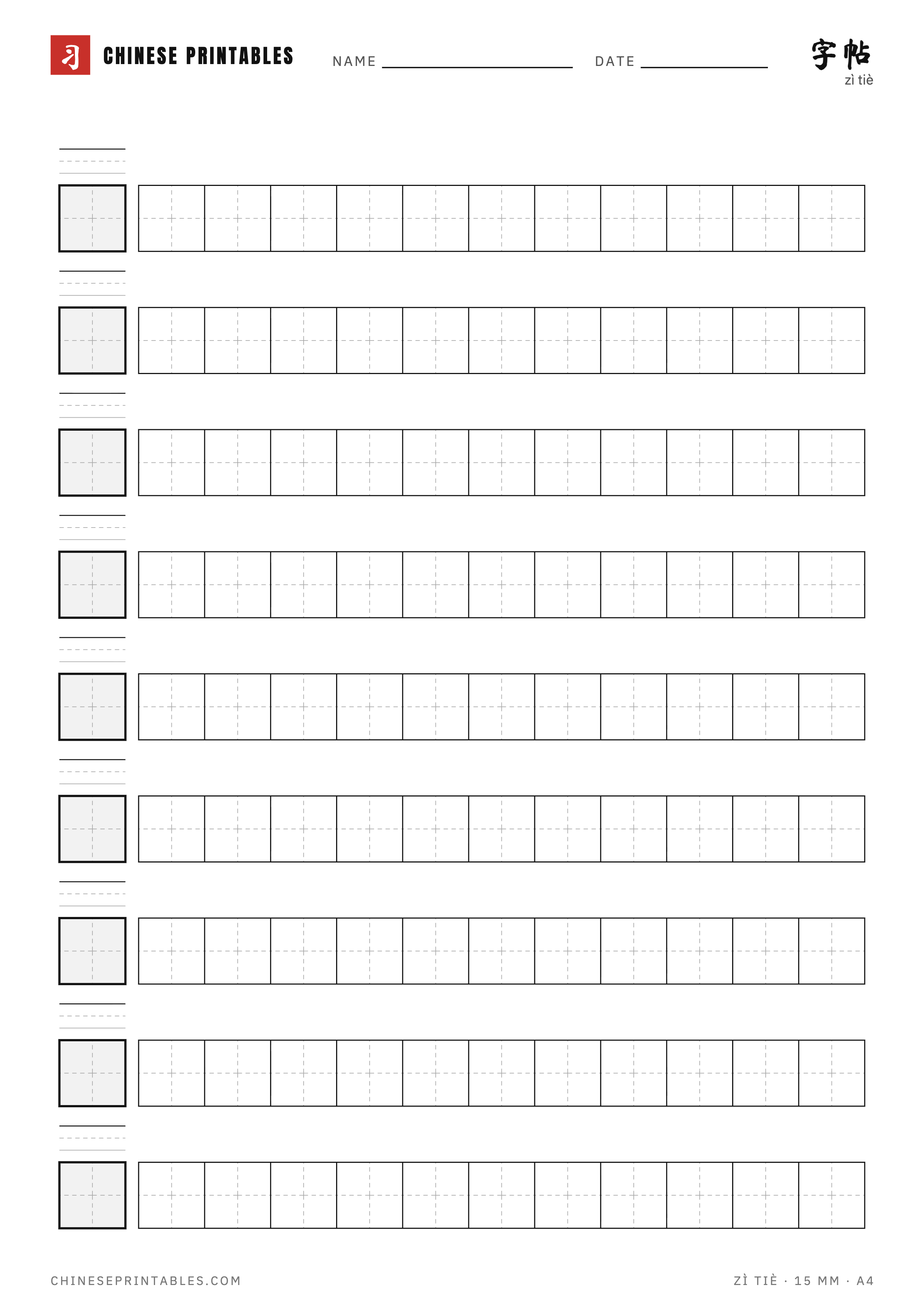
Free printable · One page
Practice writing 缺
Write 缺 in the grey model box at the start of each row and its pinyin, quē, on the lines above. Then copy it across the row, following the stroke order above.
Nine rows of field-grid squares, 15 mm. More about this sheet 03 千字海报
04 问答
Quick answers
- What does 缺 mean in English?
- 缺 (quē) means "deficiency": deficiency; lack; scarce; vacant post; to run short of.
- How do you pronounce 缺?
- 缺 is pronounced quē in pinyin, with the first (high, level) tone. In Zhuyin (bopomofo) it is written ㄑㄩㄝ.
- How many strokes does 缺 have?
- 缺 has 10 strokes, in both simplified and traditional Chinese.
- Is 缺 the same in traditional Chinese?
- Yes. 缺 is written the same way in simplified and traditional Chinese.
- What are common words with 缺?
- Common words that use 缺 include 缺少 (quēshǎo, lack), 缺点 (quēdiǎn, weak point), 缺乏 (quēfá, to lack), 缺陷 (quēxiàn, defect).
- How common is 缺?
- 缺 is number 870 of the 1,000 most common Chinese characters, in cell B32 of The First 1000 poster.
Definitions and word glosses adapted from CC-CEDICT (CC BY-SA 4.0). Stroke data from Make Me a Hanzi (Arphic Public License), animated with Hanzi Writer.